Risk Disclaimer
Trading futures, forex, and other financial instruments involves substantial risk of loss and is not suitable for every investor. Past performance is not indicative of future results. The content on this site is for educational purposes only and does not constitute financial advice. Always consult with a licensed financial advisor before making trading decisions.

VaderDan
Expert TraderProfessional trader specializing in Candle Range Theory (CRT), Wyckoff Method, and institutional order flow analysis. Helping traders master prop firm challenges and develop consistent trading strategies.
Wyckoff + CRT Integration: Combining Smart Money Analysis with Precise Entries
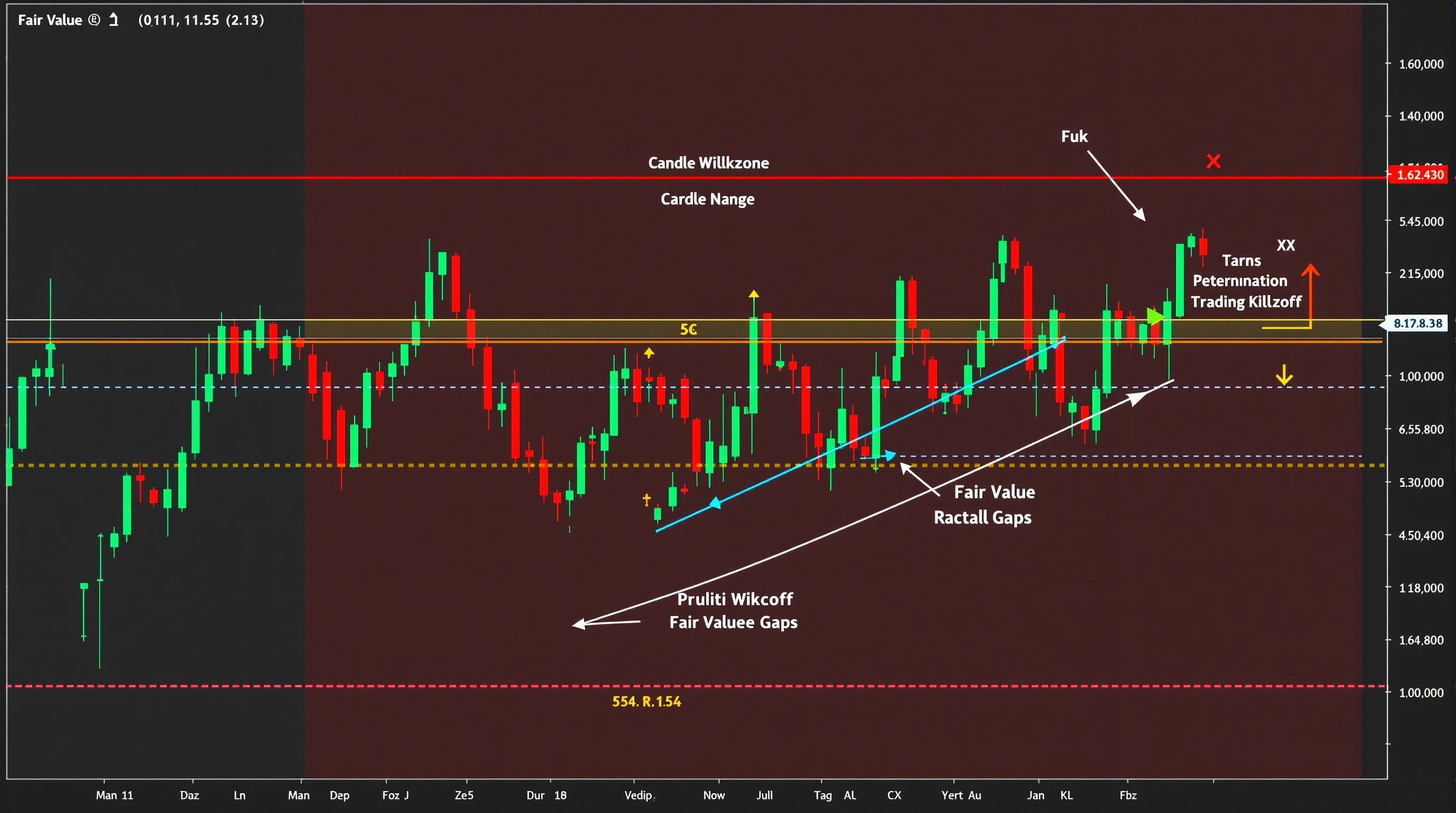
Wyckoff shows you what smart money is doing. CRT shows you exactly when and where to enter. Together, they create a powerful trading system that combines big-picture analysis with precise execution.
Why Combine Wyckoff and CRT?
Imagine having two superpowers: X-ray vision to see through walls (Wyckoff) and super hearing to detect the smallest sounds (CRT). Together, they make you nearly unstoppable.
Wyckoff Method shows you the big picture - what smart money is doing over days and weeks. Candle Range Theory gives you precise entry and exit points within those larger patterns.
The Perfect Partnership
Wyckoff Provides:
- • Market context and direction
- • Smart money intentions
- • Key levels and ranges
- • Long-term bias
CRT Provides:
- • Precise entry timing
- • Intraday execution
- • Risk management levels
- • Short-term opportunities
The Integration Framework
Step 1: Wyckoff Context (Daily Timeframe)
Start with the daily chart to identify the Wyckoff phase:
- Accumulation: Look for sideways movement after downtrend
- Markup: Rising trend with higher highs and lows
- Distribution: Sideways movement after uptrend
- Markdown: Falling trend with lower highs and lows
Step 2: CRT Execution (4H/1H Timeframes)
Use CRT concepts to find precise entries within the Wyckoff context:
- Killzones: London (8-10 AM GMT), New York (1-3 PM GMT)
- Fair Value Gaps: Price imbalances that need to be filled
- Order Blocks: Supply and demand zones
- Liquidity Grabs: Stop hunts above/below key levels
Practical Integration Examples
Example 1: Accumulation + Spring + CRT
EUR/USD Accumulation Setup
- EUR/USD in accumulation range: 1.0800 - 1.0900
- Phase B: 3 weeks of sideways movement
- Spring occurs: Drop to 1.0785, quick reversal
- Wait for London killzone (8-10 AM GMT)
- Look for liquidity grab below 1.0800
- Entry on return above 1.0800 (spring confirmation)
- Target: Fair Value Gap at 1.0850, then range high 1.0900
Example 2: Distribution + Upthrust + CRT
Gold Distribution Setup
- Gold in distribution range: $2000 - $2050
- Phase B: 4 weeks of sideways movement
- Upthrust occurs: Rally to $2065, quick reversal
- Wait for New York killzone (1-3 PM GMT)
- Look for liquidity grab above $2050
- Entry on return below $2050 (upthrust confirmation)
- Target: Bearish order block at $2020, then range low $2000
Key Integration Points
1. Killzones Align with Wyckoff Events
Major Wyckoff events (springs, upthrusts, breakouts) often happen during CRT killzones when institutional traders are most active.
Pro Tip: Springs and upthrusts during London or New York killzones have much higher probability of success than those occurring during quiet Asian session hours.
2. Fair Value Gaps Mark Wyckoff Levels
Fair Value Gaps often form at key Wyckoff levels:
- Accumulation range high: Bullish FVG on breakout
- Distribution range low: Bearish FVG on breakdown
- Spring reversal point: Bullish FVG as price recovers
- Upthrust reversal point: Bearish FVG as price falls back
3. Order Blocks Confirm Wyckoff Zones
CRT order blocks often align with key Wyckoff support and resistance levels:
- Accumulation support: Bullish order blocks form
- Distribution resistance: Bearish order blocks form
- Spring low: Strong bullish order block created
- Upthrust high: Strong bearish order block created
Multi-Timeframe Analysis
The Three-Timeframe Approach
Daily: Wyckoff Context
Identify the current Wyckoff phase and key levels. This gives you the big picture bias.
4-Hour: CRT Setup
Look for CRT patterns that align with the daily Wyckoff bias. Find your entry zones.
1-Hour: Precise Timing
Use killzones and order flow to time your exact entry and exit points.
Trade Management Integration
Entry Rules
- Wyckoff Alignment: Trade only in direction of Wyckoff bias
- CRT Confirmation: Wait for killzone activity and order flow confirmation
- Volume Validation: Ensure volume supports the move (VSA principles)
- Risk Management: Position size based on distance to invalidation level
Exit Strategy
Use both Wyckoff and CRT for optimal exits:
- Partial profits: Take profits at CRT targets (FVGs, order blocks)
- Trail stops: Move stops to CRT support/resistance levels
- Final target: Wyckoff measured moves and phase transitions
- Exit signals: Wyckoff reversal patterns or CRT momentum shifts
Advanced Integration Techniques
1. Composite Man Psychology
Think like the "Composite Man" (smart money) using both methods:
- Accumulation: Use CRT to buy on liquidity grabs during quiet accumulation
- Markup: Use CRT pullbacks to add to winning positions
- Distribution: Use CRT to sell on liquidity grabs during quiet distribution
- Markdown: Use CRT rallies to add to short positions
2. Session Bias Integration
Different trading sessions favor different Wyckoff activities:
- Asian Session: Often quiet consolidation within Wyckoff ranges
- London Session: Major Wyckoff events often begin here
- New York Session: Follow-through and continuation of London moves
- Overlap Periods: Highest probability for springs and upthrusts
Common Integration Mistakes
❌ Ignoring Wyckoff Context
Don't take CRT long signals during Wyckoff distribution phases, or shorts during accumulation phases.
❌ Over-Trading CRT Signals
Not every order block or FVG is a trade. Only take setups that align with the Wyckoff bias.
❌ Wrong Timeframe Focus
Don't let small timeframe CRT noise override larger timeframe Wyckoff trends.
Building Your Integrated System
Daily Routine
- Market Analysis: Check daily charts for Wyckoff phases and key levels
- Bias Formation: Determine if you're looking for longs, shorts, or staying flat
- CRT Setup Scan: Look for 4H setups that align with your Wyckoff bias
- Execution Plan: Mark killzones and key CRT levels for the day
- Trade Management: Monitor positions using both Wyckoff and CRT criteria
Weekly Review
- Analyze how Wyckoff phases evolved during the week
- Review which CRT setups worked best in current Wyckoff context
- Identify any missed integration opportunities
- Adjust bias for the coming week based on Wyckoff development
Key Takeaways
- ✓Wyckoff provides context and direction, CRT provides precise timing
- ✓Major Wyckoff events often occur during CRT killzones
- ✓Use three timeframes: Daily for Wyckoff, 4H for CRT setups, 1H for timing
- ✓Never trade CRT signals that go against the Wyckoff bias
- ✓Combine both methods for entries, exits, and risk management
Next Steps
Complete your Wyckoff education by learning the simplified approach to Point and Figure counting for measuring price targets.
Read Point & Figure Counting Simplified →