Risk Disclaimer
Trading futures, forex, and other financial instruments involves substantial risk of loss and is not suitable for every investor. Past performance is not indicative of future results. The content on this site is for educational purposes only and does not constitute financial advice. Always consult with a licensed financial advisor before making trading decisions.

VaderDan
Expert TraderProfessional trader specializing in Candle Range Theory (CRT), Wyckoff Method, and institutional order flow analysis. Helping traders master prop firm challenges and develop consistent trading strategies.
Order Blocks and Liquidity: The Complete CRT Trading Guide
Master institutional order blocks and liquidity zones using Candle Range Theory for high-probability entries where smart money accumulates positions.
Understanding Order Blocks
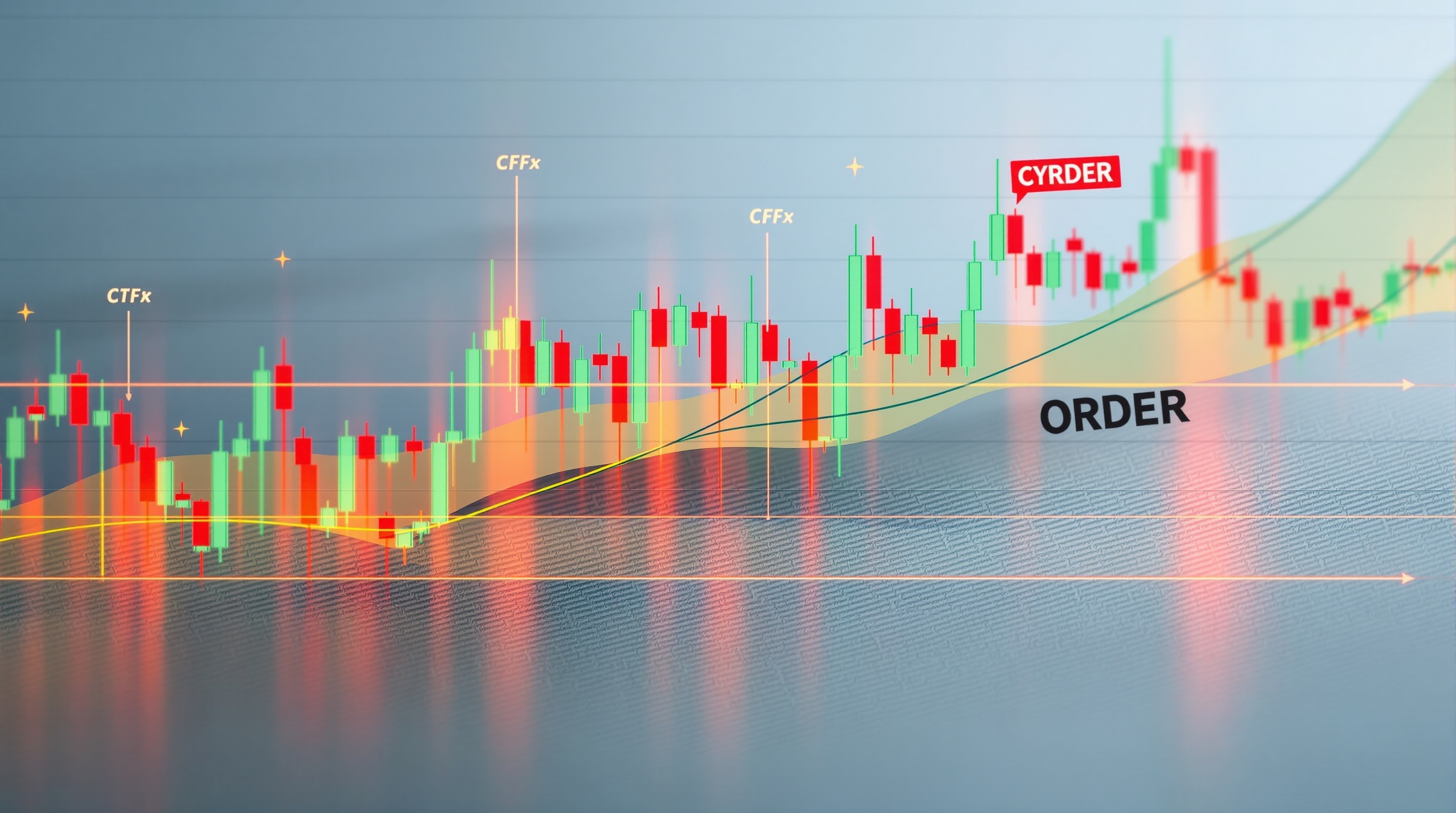
Order blocks are price zones where institutional traders (banks, hedge funds, market makers) have placed significant orders. These zones represent areas of strong buying or selling interest that often act as support or resistance when price returns to them.
In Candle Range Theory, order blocks are identified by specific candle patterns that show institutional activity. Understanding these patterns allows retail traders to align their trades with smart money rather than against it.
Key Insight
Order blocks are not just support and resistance levels. They represent unfilled institutional orders waiting to be executed. When price returns to these zones, institutions complete their positions, creating powerful reactions.
Types of Order Blocks
Bullish Order Blocks
Bullish order blocks form when institutions accumulate long positions:
- Last Down Candle: The final bearish candle before a strong bullish move
- High Volume: Increased volume shows institutional buying
- Strong Rejection: Price quickly reverses from this zone
- Support Zone: Acts as support when price returns
- Unfilled Orders: Institutions have more buy orders waiting
Bearish Order Blocks
Bearish order blocks form when institutions distribute short positions:
- Last Up Candle: The final bullish candle before a strong bearish move
- High Volume: Increased volume shows institutional selling
- Strong Rejection: Price quickly reverses from this zone
- Resistance Zone: Acts as resistance when price returns
- Unfilled Orders: Institutions have more sell orders waiting
Liquidity in Trading
What is Liquidity?
Liquidity refers to areas where stop losses and pending orders are clustered. Institutions need liquidity to fill their large orders without causing significant price slippage.
Common liquidity zones include:
- Above Swing Highs: Buy stops from short sellers
- Below Swing Lows: Sell stops from long traders
- Round Numbers: Psychological levels (1.1000, 4000, etc.)
- Previous Day High/Low: Common stop placement areas
- Equal Highs/Lows: Double tops/bottoms attract stops
Liquidity Grabs
Institutions deliberately move price to liquidity zones to:
- Trigger Stop Losses: Create selling/buying pressure
- Fill Large Orders: Use triggered stops as counterparty
- Shake Out Weak Hands: Remove retail traders from good positions
- Create False Breakouts: Trap breakout traders
- Reverse Direction: Move price in intended direction after grab
Pro Tip
The best trading opportunities occur when price grabs liquidity and then returns to an order block. This combination provides high-probability entries with excellent risk/reward ratios.
Identifying Valid Order Blocks
CRT Criteria for Order Blocks
Not every candle before a reversal is an order block. Valid order blocks must meet specific criteria:
1. Strong Impulse Move
- Price moves decisively away from the order block
- Large candle ranges indicate institutional participation
- Minimal retracement during the impulse
- Volume confirms the move
2. Candle Characteristics
- Last opposite-colored candle before impulse
- Relatively large body compared to recent candles
- Small wicks show decisiveness
- Closes near high (bullish) or low (bearish)
3. Market Structure
- Order block aligns with higher timeframe trend
- Located at key support/resistance levels
- Forms after liquidity grab
- Respects previous market structure
4. Killzone Timing
- Forms during London or New York killzone
- High liquidity sessions create stronger blocks
- Asian session blocks are less reliable
- Institutional trading hours matter
Trading Order Blocks with CRT
Complete Trading Strategy
Step 1: Identify the Order Block
- Find last opposite candle before strong impulse
- Mark the entire candle range as the order block zone
- Note the high, low, and 50% level of the block
- Verify it meets all validity criteria
Step 2: Wait for Price to Return
- Price must retrace back to the order block
- Deeper into the block = higher probability
- Watch for reaction at the 50% level
- Be patient - blocks can take days/weeks to test
Step 3: Confirm with CRT Signals
- Look for rejection wicks at the order block
- Wait for bullish/bearish engulfing candle
- Confirm during appropriate killzone
- Volume should increase on reversal
Step 4: Enter the Trade
- Enter on close of confirmation candle
- Or enter on break of confirmation candle high/low
- Use limit orders within the order block for better fills
- Risk 1-2% of account per trade
Step 5: Set Stop Loss
- Place stop beyond the order block (10-20 pips)
- Or below/above the liquidity grab wick
- Give trade room to breathe
- Never use mental stops
Step 6: Set Targets
- Target 1: Recent swing high/low (1:2 R/R minimum)
- Target 2: Next order block or liquidity zone (1:3-1:5 R/R)
- Target 3: Major structure level (1:5+ R/R)
- Take partial profits at each target
Common Mistake
Don't enter blindly when price touches an order block. Wait for confirmation through price action and CRT signals. Order blocks can be broken, especially if market structure has changed.
Order Block + Liquidity Combinations
The Perfect Setup
The highest probability trades combine order blocks with liquidity grabs:
Bullish Setup
- Price sweeps below swing low (liquidity grab)
- Triggers sell stops from long traders
- Quickly reverses back above the low
- Returns to bullish order block above
- Confirms with bullish CRT candle
- Institutions now long with stops cleared below
Bearish Setup
- Price sweeps above swing high (liquidity grab)
- Triggers buy stops from short sellers
- Quickly reverses back below the high
- Returns to bearish order block below
- Confirms with bearish CRT candle
- Institutions now short with stops cleared above
Multi-Timeframe Order Block Analysis
Higher Timeframe Context
Always start with higher timeframes to identify major order blocks:
Daily Timeframe
- Identify major trend direction
- Mark significant order blocks
- Note key liquidity zones
- These are the strongest levels
4-Hour Timeframe
- Refine daily order blocks
- Identify intermediate structure
- Find swing points for entries
- Confirm daily bias
1-Hour Timeframe
- Precise entry timing
- Intraday order blocks
- Killzone analysis
- Entry trigger candles
15-Minute Timeframe
- Fine-tune entries
- Exact stop placement
- Scalping opportunities
- Quick confirmations
Timeframe Alignment
The best trades have order block alignment across timeframes:
- Daily order block provides overall direction
- 4H order block confirms the setup
- 1H order block gives entry zone
- 15M provides precise entry trigger
- All timeframes pointing same direction = highest probability
Order Block Mitigation
What is Mitigation?
Mitigation occurs when price returns to an order block and institutions fill their remaining orders. Once fully mitigated, the order block loses its power.
Signs of mitigation:
- Price Enters Block: Touches or enters the order block zone
- Strong Reaction: Quick reversal from the block
- Volume Spike: Increased volume shows order filling
- Continuation: Price continues in expected direction
- Block Respected: Doesn't fully penetrate the block
Partial vs. Full Mitigation
Partial Mitigation
- Price touches upper/lower portion of block
- Reverses before reaching 50% level
- Block remains valid for future tests
- Can provide multiple trading opportunities
Full Mitigation
- Price fully enters and closes within block
- Reaches or exceeds 50% level
- Block is considered "used up"
- Look for new order blocks to form
Advanced Order Block Concepts
Breaker Blocks
When an order block is broken and price closes beyond it, it can become a "breaker block" - an order block that now works in the opposite direction.
- Bullish order block broken to downside becomes bearish breaker
- Bearish order block broken to upside becomes bullish breaker
- Indicates shift in institutional positioning
- Often marks trend reversals
- Can be very powerful trading zones
Order Block Refinement
On lower timeframes, you can refine order blocks for more precise entries:
- Zoom into 5M or 1M chart
- Find the exact candle where impulse began
- Use this refined zone for entries
- Tighter stops with same targets
- Improves risk/reward ratios significantly
Order Block Clusters
Multiple order blocks stacked together create powerful zones:
- Daily + 4H + 1H order blocks aligned
- Creates "institutional zone of interest"
- Highest probability reversal areas
- Worth waiting for these setups
- Often provide best risk/reward trades
Real-World Trading Examples
Example 1: EUR/USD Bullish Order Block
Setup: EUR/USD in uptrend on daily chart, pulled back to 4H bullish order block.
- Order Block: 1.0850-1.0870 zone from previous impulse
- Liquidity Grab: Asian session swept 1.0845 low
- Entry: London killzone bullish engulfing at 1.0860
- Stop Loss: 1.0840 (20 pip risk)
- Target: 1.0950 previous high (90 pip gain, 4.5:1 R/R)
Example 2: ES Futures Bearish Order Block
Setup: S&P 500 futures in downtrend, rallied to daily bearish order block.
- Order Block: 4250-4265 zone from previous drop
- Liquidity Grab: Swept 4270 high during overnight
- Entry: NY open bearish engulfing at 4260
- Stop Loss: 4275 (15 point risk)
- Target: 4150 previous low (110 point gain, 7.3:1 R/R)
Common Order Block Mistakes
1. Trading Every Order Block
Not all order blocks are equal. Focus on blocks that align with higher timeframe trend, have liquidity grabs, and form during killzones.
2. Ignoring Market Structure
Order blocks work best when market structure supports them. Don't trade bullish blocks in strong downtrends or vice versa.
3. Entering Without Confirmation
Wait for price action confirmation at the order block. Blind entries often result in stopped out trades.
4. Poor Stop Placement
Stops must be beyond the order block and liquidity zone. Tight stops within the block will get hit by normal price action.
5. Overcomplicating Analysis
Keep it simple. Mark major order blocks, wait for price to return, confirm with CRT, and execute. Don't overthink it.
Master Smart Money Concepts
Ready to dive deeper into institutional trading strategies? Explore liquidity grabs, stop hunts, and complete smart money analysis in our comprehensive guides.
Explore All CRT ArticlesNext Steps
Continue your order block education with these related topics:
- Liquidity Grabs and Stop Hunts - Understanding manipulation tactics
- Institutional Order Flow - How smart money moves markets
- Smart Money Concepts - Complete SMC guide
- Multi-Timeframe Analysis - Top-down trading approach
Risk Disclaimer
Trading futures, forex, and other leveraged instruments involves substantial risk of loss and is not suitable for all investors. Past performance is not indicative of future results. The content on this website is for educational purposes only and does not constitute financial advice. Always conduct your own research and consider seeking advice from a licensed financial advisor before making any investment decisions. See our full Risk Disclaimer for more information.
About VaderDan
Professional trader specializing in Candle Range Theory and institutional order flow. With over 30 years of trading experience, VaderDan helps traders understand market structure and develop mechanical trading systems through detailed educational content.
Learn more about VaderDan